Science Flight Dynamics Research Facility Characteristics The Flight Dynamics Research Facility (FDRF) is a large, subsonic wind tunnel with a vertical test section used for flight dynamics research, including stability, controllability, free-fall, aircraft spin and spin-recovery testing of atmospheric vehicles. The test section measures 20 ft. in diameter by 24 ft. high. Airflow speed ranges from
Science Flight Dynamics Research Facility The Flight Dynamics Research Facility (FDRF) is a large, subsonic wind tunnel with a vertical test section for flight dynamics research, including stability, controllability, free-fall, aircraft spin and spin recovery testing of atmospheric vehicles. The FDRF will be a highly versatile and cost effective vertical wind tunnel for conducting free
Science Cosmic Origins Seminar, 10 June 2026 The ASTRA Initiative. Cosmic Origins Seminar, 10 June 2026. Speaker: Jessica Gaskin. astra initiative, astra, cosmic origins, cosmic, origins, seminar, 10 june, june 2026, jessica gaskin, speaker
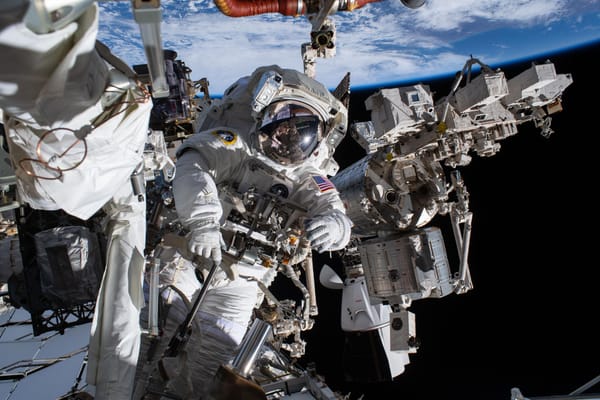
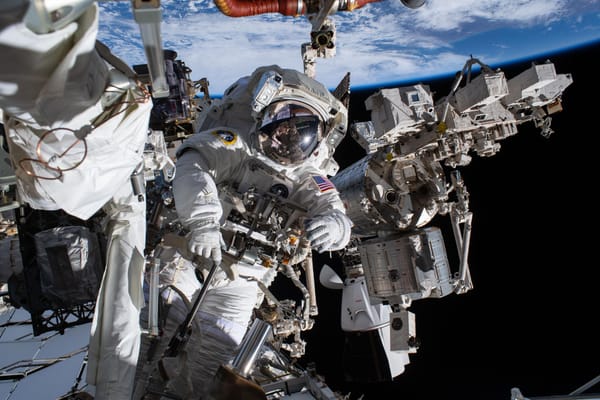
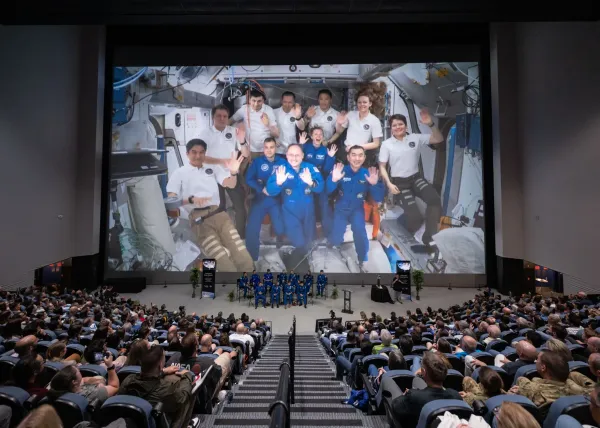
Science Crew Studies Microbes, Tests Tech and Congratulates Artemis III Crew Microbiology and human research were the main scientific focus aboard the International Space Station on Tuesday as Expedition 74 worked to protect health on and off the Earth. The crew also advanced hardware tests and sent down a congratulatory message to the Artemis III crew, who were named during an
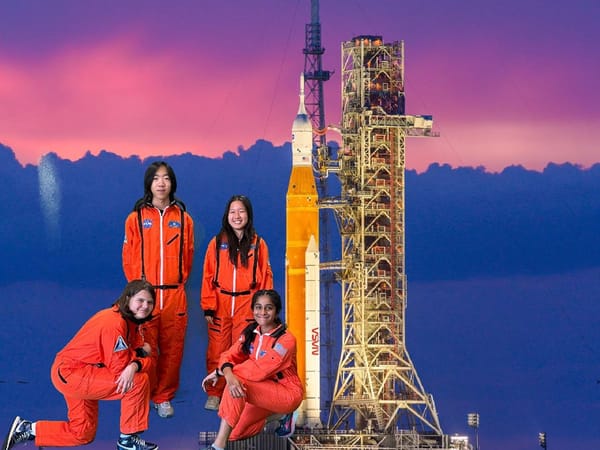
Science NASA names Artemis III crew as mission prepares for 2027 tests NASA announced the four prime crew members and a backup for the Artemis III test flight, a series of challenging tests in Earth orbit planned for 2027 that are essential for Artemis IV, the first planned crewed mission to the lunar South Pole in 2028. The agency will launch the
Science Whole-body rejuvenation drugs and five things to know about AI David Sinclair plans to test a human “reprogramming” drug in a $101 million XPrize competition that aims to restore people to an earlier apparent age. The contest will judge improvements in immune, cognitive, and muscle function, and awards a grand prize to any team that can show a 10-year (or
Science What Is Mass Distribution? Mass distribution affects everything from galaxy shapes to aircraft design to planetary rotation. It helps map stars in our universe, reveals what planets are made of, and even guides how luggage is loaded onto an airplane. To make the idea easier to picture, consider a soccer ball. On the outside
Science Community Science (Ad ASTRA) Workshop, Sept 1–3, 2026 The Community Science (Ad ASTRA) Workshop will take place in Pasadena, California, and virtually from 1–3 September 2026. Organized by the NASA Astrophysics Division in partnership with the Infrared Processing and Analysis Center (IPAC), the workshop is designed to engage the community in defining future large, strategic astrophysics missions.
Science Fornax Initiative at AAS 248, 14–18 June 2026 The Fornax Initiative is part of the 248th AAS meeting in Pasadena, California, held 14–18 June 2026. On Sunday, 14 June 2026, the Fornax Workshop runs 2:00pm - 4:00pm: An Introduction to Fornax: Scalable Data and Compute for Scientific Analysis at Pasadena Convention Center - Conference Center,
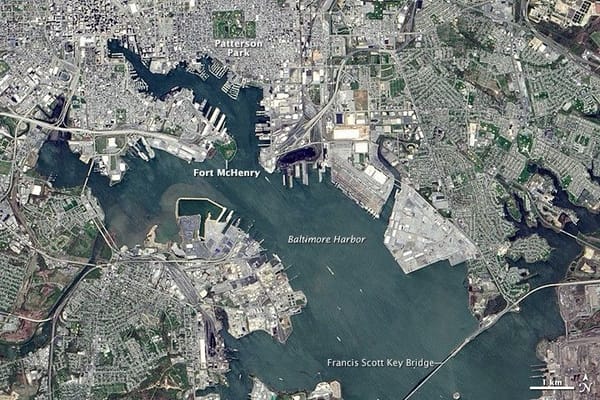
Science San Francisco’s Metropolitan Mosaic A period of unsettled weather brought scattered showers and thunderstorms to the Bay Area on May 27, 2026, but a break in the clouds left downtown San Francisco and nearby communities mostly clear for an astronaut aboard the International Space Station to photograph the region. The image captures the Golden
Science Crew begins week with cartilage printing and plant harvesting Expedition 74 began the week bioprinting human cartilage tissue and harvesting alfalfa aboard the International Space Station to advance crew health and promote self-sufficiency. The orbital residents also retrieved materials exposed to the external space environment and conducted ultrasound vein scans to study how living in space affects physics and
Science HELIOTECH and Orbital Flight Symposium — Abstracts due 17 June 2026 Registration and abstract submission are open for the 2026 Joint HELIOTECH and Orbital Flight Symposium, which combines the Heliophysics Technology Symposium and Heliophysics Orbital Flight Missions to spark innovation and foster collaboration on technology needed to explore the Sun-Earth-Moon system, Mars and destinations beyond. The meeting will be held 31
Science IXPE Cycle 4 Pre-Proposal Workshop — Register by 25 June 2026 A virtual pre-proposal workshop in preparation for IXPE Cycle 4 of the General Observer program will be held Tuesday, 30 June 2026, from 12 noon to 3 p.m. Eastern (9 a.m. to 12 noon Pacific). IXPE, the Imaging X-ray Polarimetry Explorer, provides simultaneous imaging, spectral, timing and polarization
Science Did you solve it? Do you have a snout for numbers? There is a number N beginning with 4 such that moving the 4 to the end creates a new number that is a quarter of N. In other words N is of the form 4[…], and N ÷ 4 = […]4. What is the lowest possible value of N? Start with two
Science NASA-DARES Draft Strategy Open for Public Comment The NASA Astrobiology Program and DARES Task Force 2 have opened a public comment period for the draft Decadal Astrobiology Research and Exploration Strategy (NASA-DARES). The draft report is available in slide form. Findings from Focus Area 9: Astrobiology in Society are forthcoming, and an abbreviated summary presented at AbSciCon
Science Upcoming SIG and SAG activities, 10 - 17 June 2026 Upcoming activities relevant to the Program Analysis Groups are scheduled for 10 - 17 June 2026. Wednesday 10 June at 11a Eastern (8a Pacific): Gravitational Wave Science Interest Group (GW SIG) seminar — Expected Science from deciHz Gravitational Waves, Cole Miller (University of Maryland). At 1p Eastern (10a Pacific): Habitable Worlds
Science GW SIG Seminar — Cole Miller, University of Maryland Cole Miller of the University of Maryland is the speaker for the GW SIG Seminar. The seminar is listed as 10 June 2026. GW SIG Seminar, 10 June 2026. cole miller, university, maryland, gw sig, sig seminar, seminar, speaker, 10 june, june 2026, 2026
Science West Ireland's limestone springs, myth and Hollywood legend “If you take all these springs together in terms of flow, it’s by far the largest in Ireland, and one of the biggest systems in the world,” said Dr Benjamin Thébaudeau, geologist for the newly designated Unesco Joyce Country and Western Lakes Geopark in western Ireland. Over a few
Science Jabal al Fāyah's Ridges Reveal Ancient Seas and Early Human Sites About an hour’s drive east of Dubai, at the northern edge of the Rub’ al Khali, pale limestone ridges rise from the desert plain, the largest—Jabal al Fāyah—reaching 412 meters above sea level. Landsat 8 captured this landscape on October 23, 2025, where saffron-colored sand meets the
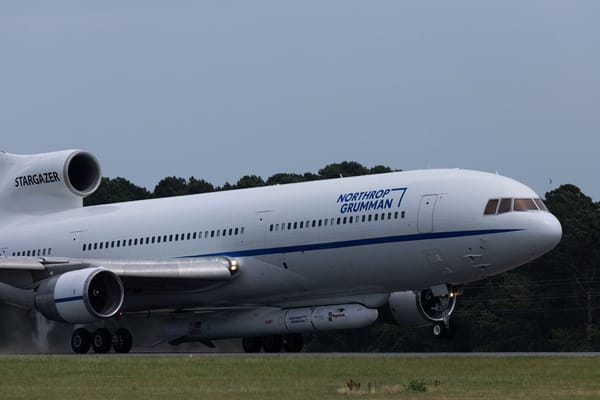
Science Robotic spacecraft LINK arrives at Wallops for Swift boost mission LINK, a robotic servicing spacecraft built by Katalyst Space to capture and boost NASA’s Neil Gehrels Swift Observatory, arrived at the Wallops Flight Facility in Virginia on Friday, June 5. At Wallops’ Horizontal Integration Facility, Northrop Grumman engineers will install the spacecraft into one of the company’s Pegasus
Science NASA Announces Winners of 2026 University Innovation Competition Massachusetts Institute of Technology took first place in the 2026 Revolutionary Aerospace Systems Concepts – Academic Linkage (RASC-AL) competition with Exploration-Class Lunar Integrated Power SystEm. A second MIT team placed overall with Mars Exploration Layered Infrastructure for Operations, Research, and Advancement, while Virginia Polytechnic Institute and State University finished third with
Science Total Solar Eclipse Aug. 12, 2026 On Aug. 12, 2026, a total solar eclipse will sweep across Greenland, Iceland, northern Russia, the Atlantic Ocean, Spain, and a small corner of Portugal. Many other places in the Northern Hemisphere will see a partial eclipse, including parts of the northern U.S. (from Alaska to North Carolina), most
Science NASA's X-59 Flies Supersonic for First Time NASA’s experimental X-59 flew faster than the speed of sound for the first time on Friday, June 5. Test pilot Jim “Clue” Less took off and landed at Edwards Air Force Base in California, reaching a top speed of approximately Mach 1.1 (713 mph) and an altitude of
Science INCUS mission nears launch to study tropical convective storms Teams building the INCUS (Investigation of Convective Updrafts) mission have finished assembly and testing of two of the three SmallSats that will survey the dynamics of tropical convective storms. Testing on the third SmallSat continues, with completion scheduled no earlier than September ahead of a 2027 launch. The three observatories
Science Artemis II science continues on Earth after crew returns After the Artemis II crew safely splashed down in the Pacific on April 10, teams moved quickly to collect data that will help explain how the human body adapts from microgravity back to Earth’s gravity. Crew members Reid Wiseman, Victor Glover, Christina Koch, and CSA astronaut Jeremy Hansen completed