Pumice rafts from Bismarck Sea eruption clog Admiralty Islands
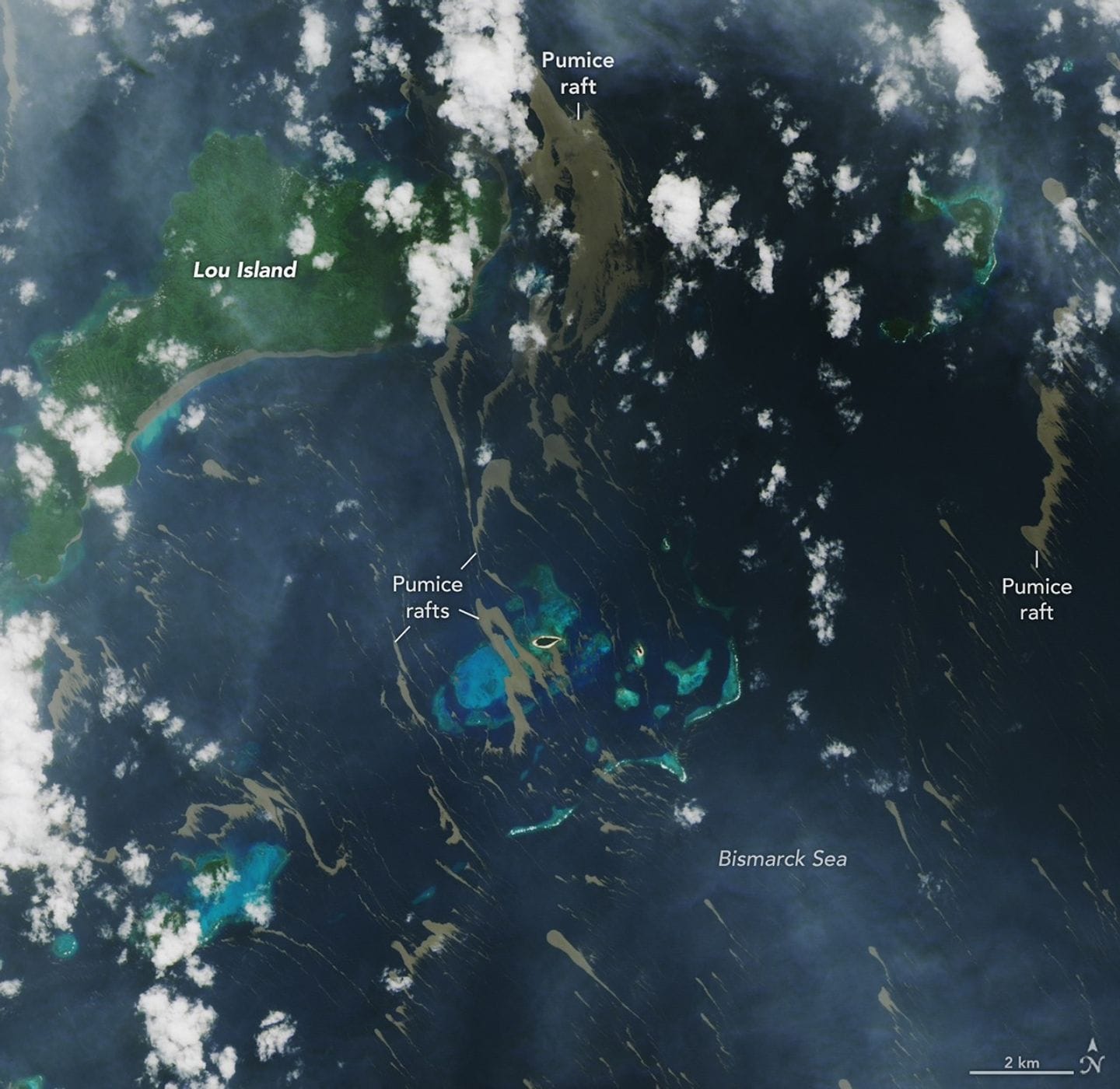
Satellites detected an unexpected submarine eruption in the Bismarck Sea on May 8, 2026, near islands of Papua New Guinea. The activity, ongoing as of mid‑June, may be occurring along the Titan Ridge and has the potential to form an ephemeral new island. In early June, rafts of buoyant volcanic rock drifted northwest from the eruption site and began clogging coastlines in the Admiralty Islands.
Bands of pumice are visible in an OLI on Landsat 8 image from June 4. Several days later, thick masses reached coastal areas; communities on Lou Island and Baluan Island were among the worst affected, with a layer up to several meters thick blanketing the shore and cutting off access to the water.
The coast and waterways around larger Manus Island, about 125 kilometers northwest of the volcano and out of frame, were similarly choked. Pumice can remain afloat for months to years before sinking out of satellite view. Larger rafts can form with the help of ash, which serves to "weld" together fragments of the porous rock, Jim Garvin said.
Papua New Guinea, Admiralty Islands
pumice rafts, bismarck sea, admiralty islands, submarine eruption, titan ridge, landsat 8, oli, lou island, baluan island, manus island