Human research, bioprinting and maintenance fill station schedule
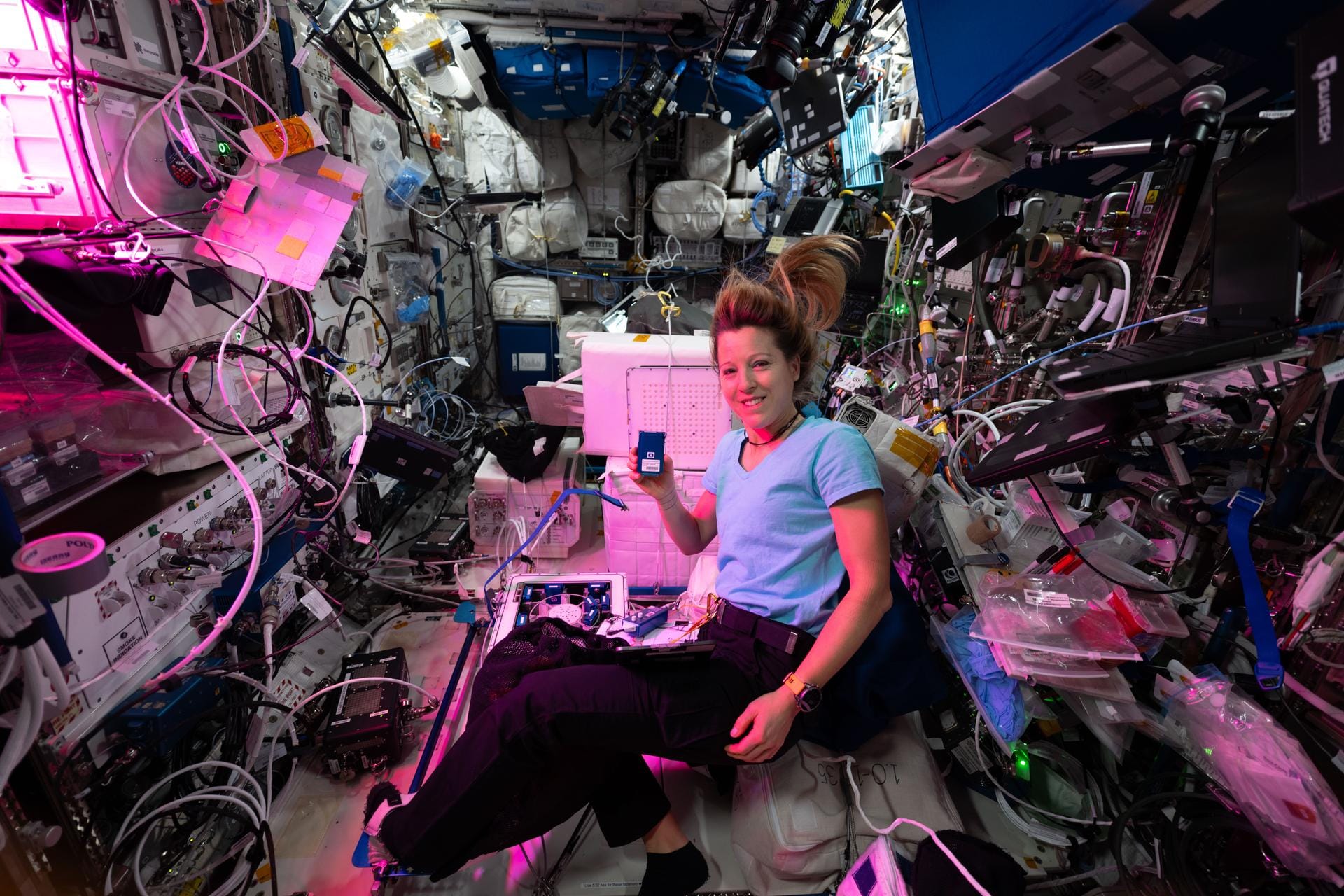
Wednesday aboard the International Space Station featured human research, microbial analysis and 3D bioprinting alongside routine maintenance and cargo work. Doctors on the ground monitor astronaut health continuously, and the long-running CIPHER suite of 14 studies examines how spaceflight affects physical and mental condition.
Flight engineer Chris Williams began his shift by collecting blood and urine samples, then completed a trio of tests measuring thinking skills and spatial judgment for comparison with other crew members and pre- and postflight data. Flight engineer Jack Hathaway collected microbial samples around the station that will be incubated before DNA sequencing to track bacterial survival and antibiotic-resistant genes.
He also thawed and cleaned cartilage cells mixed with bio-ink, then assisted flight engineer Jessica Meir in loading the bio-ink into a 3D bioprinter to produce cartilage tissues, a step that could advance regenerative medicine and on-demand, personalized implants.
space station, astronaut health, 3d bioprinting, microbial analysis, cipher, blood samples, urine samples, antibiotic resistance, cartilage cells, regenerative medicine