How a crinkle-crankle wall reinvented the Serpentine pavilion
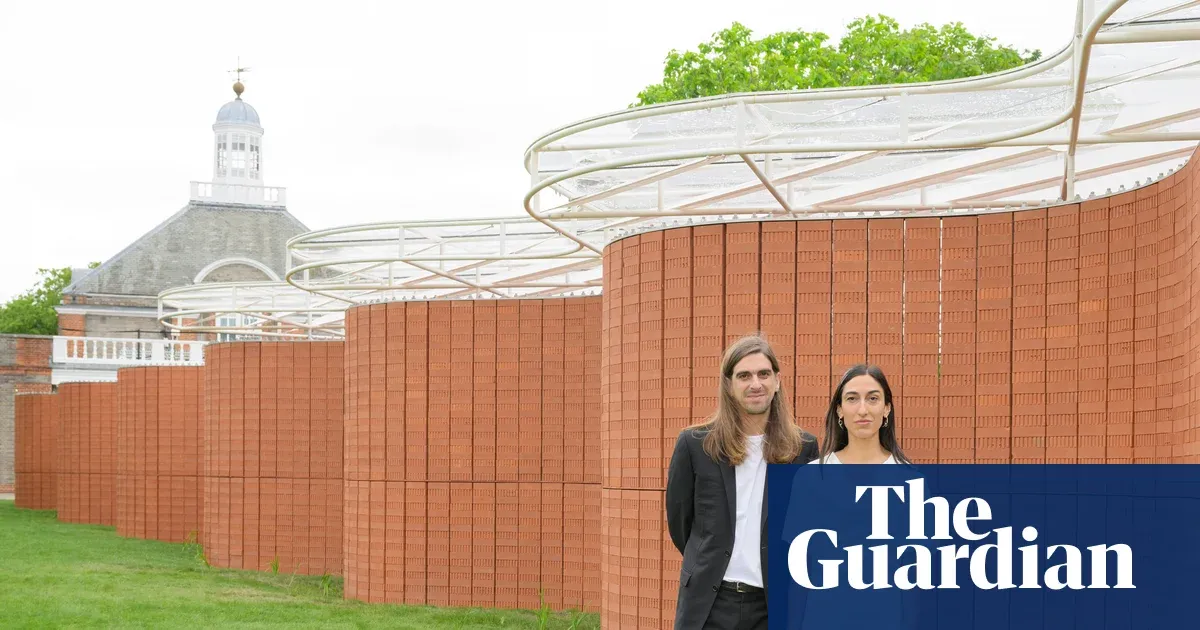
For 25 years the Serpentine pavilion on the green carpet of Kensington Gardens has acted as architectural haute couture, commissioning architects who had not previously built in the UK. Past pavilions ranged from Frank Gehry’s lumber-yard explosion to Peter Zumthor’s charcoal-walled hortus conclusus.
This year it’s the turn of Lanza Atelier, a Mexico City studio founded by Isabel Abascal and Alessandro Arienzo, known for reinterpreting familiar materials and forms through craft, technology and spatial traditions. Their response is literal: a serpentine expressed as a wavy, rust-coloured brick wall — a crinkle-crankle or slangenmuur with roots in rural Suffolk, links to Dutch drainage works, and relatives in Mexico and ancient Egyptian sites.
The undulating form is structurally efficient, almost sinusoidal, allowing a single layer of bricks to resist lateral forces and, when aligned east–west, to let the south-facing curves catch sun and prolong growing seasons.
United Kingdom, Kensington Gardens
serpentine pavilion, kensington gardens, lanza atelier, isabel abascal, alessandro arienzo, crinkle-crankle, slangenmuur, brick wall, mexico city, suffolk