
How Solar Power Is Helping Irrigate Two Million Acres in Remote Australia
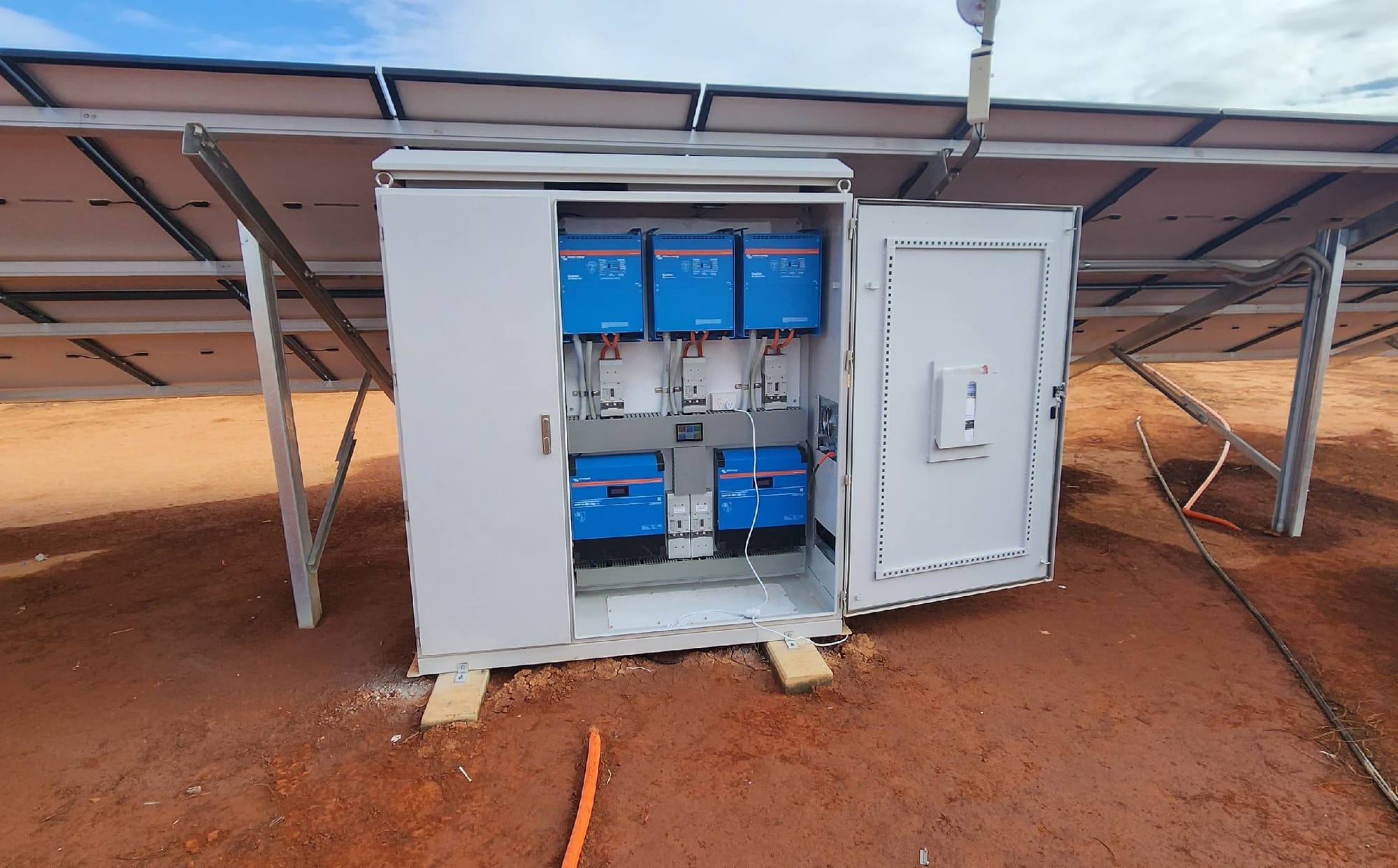
A massive off-grid renewable energy project in Australia is transforming the way water is delivered across one of the most isolated agricultural regions on Earth.
Located on the vast Nullarbor Plain in South Australia, the Madura Plains sheep station covers an enormous remote area where access to water is critical for survival. The property depends on boreholes, reservoirs, and an extensive water distribution network stretching more than 1,400 kilometers (870 miles) through harsh desert-like terrain.
To keep livestock supplied with water, the station operates more than 200 drinking troughs spread across 118 paddocks. Until recently, workers had to travel hundreds of kilometers along rough tracks to manually inspect pumps, tanks, and water levels — a time-consuming and costly process that placed heavy strain on both staff and vehicles.
That challenge led to the deployment of a large-scale renewable energy and remote monitoring system built around Victron Energy technology.
Renewable Energy Replaces Constant Site Visits
The project was developed by Australian off-grid specialist MyEnergy Engineering. Their goal was not only to power critical water infrastructure using solar energy, but also to create a fully connected monitoring network capable of managing water resources remotely.
The installation combines solar power, lithium battery storage, backup generators, and intelligent control systems to operate high-demand three-phase water pumps in locations far away from the electricity grid.
At the station’s main homestead, the system includes:
- 45 kVA three-phase power supplied by Victron Quattro inverter/chargers
- 96 kWh Pylontech lithium battery storage
- 44.28 kW Trina Solar photovoltaic array
- Victron SmartSolar MPPT RS charge controllers
In addition, three remote pumping sites operate independently using:
- 24 kVA three-phase power systems
- 42 kWh lithium battery banks at each location
- 29 kW solar arrays
- Backup generators for low-solar periods
The entire infrastructure is managed through Victron Cerbo GX communication centers connected to the Victron Remote Management (VRM) platform.
Smart Monitoring Across Hundreds of Kilometers
One of the most innovative aspects of the project is the ability to monitor water resources remotely.
Sensors installed in reservoirs and tanks continuously transmit water-level data. Operators can view tank levels, battery status, solar production, generator activity, and pump performance from virtually anywhere with an internet connection.
The system can even start backup generators automatically when battery levels fall or energy demand increases.
For a property operating across hundreds of kilometers of remote land, this dramatically reduces maintenance trips while improving reliability and response times.
Why This Project Matters
Large agricultural operations around the world face increasing pressure from droughts, rising energy costs, and labor shortages. Water pumping is often one of the most energy-intensive parts of farming.
According to recent global irrigation research, solar-powered pumping systems are becoming increasingly important for improving food security and reducing operating costs in remote agricultural regions. AGU Newsroom
The Madura Plains project demonstrates how renewable energy, battery storage, and remote automation can work together to maintain critical infrastructure in areas where traditional grid connections are either unavailable or economically impractical.
With more than 1,400 km of pipelines and over 200 watering points, the scale of the installation highlights how modern off-grid technologies are increasingly being used far beyond residential and small commercial applications.
A Glimpse Into the Future of Remote Agriculture
As climate conditions become more challenging and farms continue adopting digital infrastructure, projects like Madura Plains may become a model for large-scale agricultural operations worldwide.
Instead of relying on constant manual inspections, operators can now manage water distribution networks remotely, optimize energy consumption, reduce fuel use, and improve resilience during drought periods.
For remote regions where water is life, combining solar energy with intelligent monitoring systems could become one of the most important agricultural technologies of the coming decade.