Best Solar Batteries for Off-Grid Living in 2026
Discover the best solar batteries for off-grid homes in 2026, including Tesla Powerwall, Pylontech, BYD, LG and more. Compare performance, lifespan, storage capacity and value
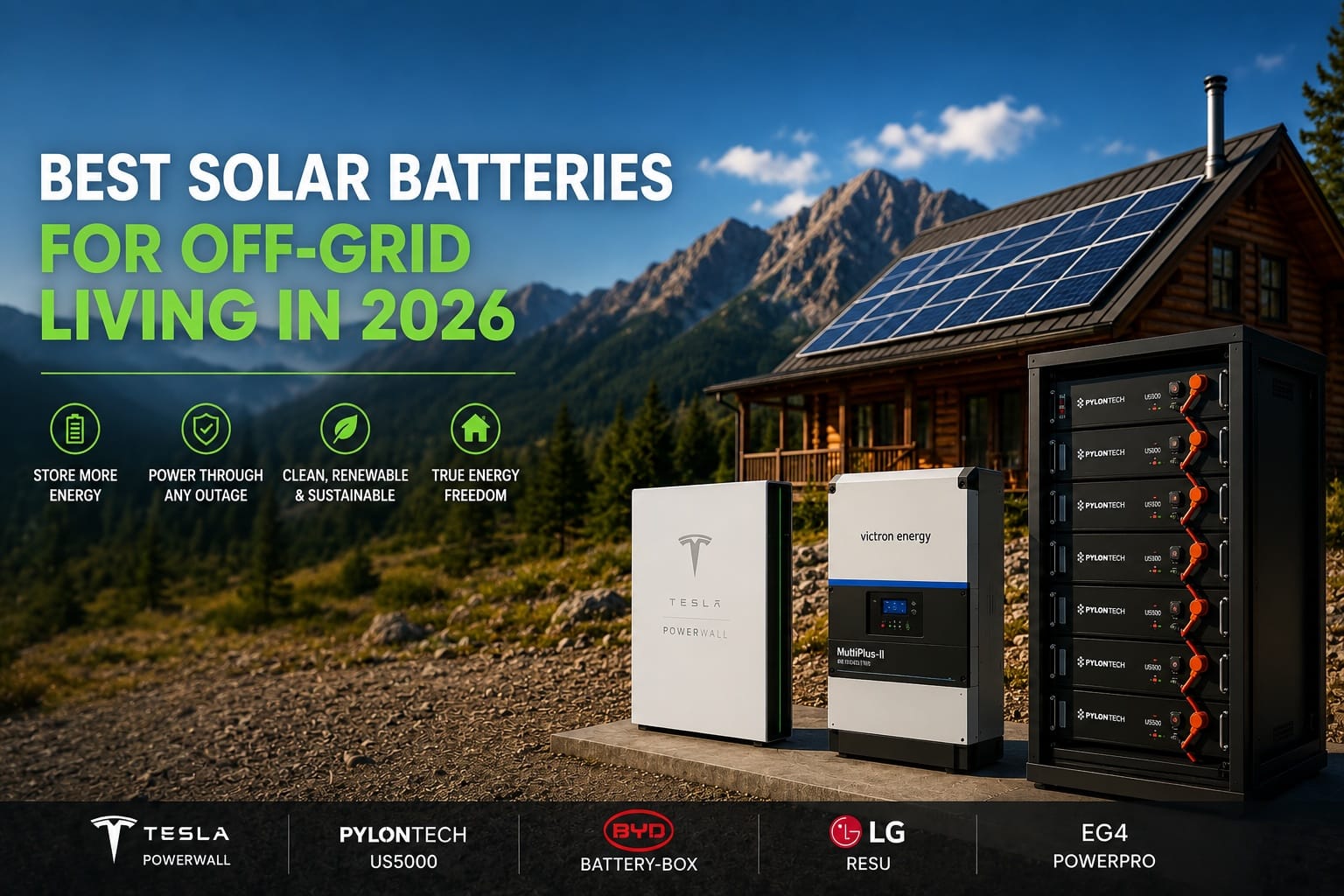
As electricity prices continue rising and more homeowners seek energy independence, off-grid solar systems have become increasingly popular across the United States and around the world.
At the center of every successful off-grid setup is one critical component: the battery system.
Choosing the right solar battery can determine how reliably your home operates during cloudy weather, winter months, and power outages. In 2026, battery technology has improved dramatically, offering longer lifespans, better efficiency, and greater storage capacity than ever before.
This guide compares the best solar batteries for off-grid living in 2026 and explains what homeowners should consider before investing in an energy storage system.
Why Solar Batteries Matter for Off-Grid Systems
Unlike grid-connected homes, off-grid properties cannot rely on utility power when solar production drops.
The battery system must store enough energy during sunny periods to power the home overnight and during bad weather.
A high-quality solar battery provides:
- Energy independence
- Backup power during outages
- Better solar self-consumption
- Reduced generator usage
- Long-term electricity savings
For off-grid living, battery reliability is often more important than solar panel capacity.
What Makes a Good Off-Grid Battery?
Several factors separate average batteries from the best off-grid solutions.
Capacity
Battery capacity determines how much energy can be stored.
Measured in kilowatt-hours (kWh), larger capacities allow homes to operate longer without sunlight.
Cycle Life
Cycle life indicates how many charge and discharge cycles a battery can complete before significant degradation occurs.
The best modern batteries often exceed:
- 6,000 cycles
- 8,000 cycles
- 10,000 cycles
Efficiency
Higher efficiency means less energy is lost during charging and discharging.
Most premium lithium batteries achieve over 95% efficiency.
Scalability
The ability to expand storage capacity becomes important as household energy needs grow.
Safety
Lithium Iron Phosphate (LiFePO4) batteries have become the preferred choice due to their thermal stability and long lifespan.
1. Tesla Powerwall 3
Tesla remains one of the most recognized names in home energy storage.
The Powerwall 3 offers:
- Integrated inverter
- High power output
- Smart energy management
- Backup functionality
Advantages
- Strong software ecosystem
- Easy monitoring
- Reliable performance
Drawbacks
- Premium pricing
- Less flexible for highly customized off-grid installations
2. Pylontech US5000
The Pylontech US5000 has become one of the most popular batteries among serious off-grid users.
Its popularity comes from a combination of affordability, scalability, and proven reliability.
Advantages
- LiFePO4 chemistry
- Excellent cycle life
- Modular expansion
- Strong compatibility with Victron systems
Drawbacks
- Requires external inverter systems
- More technical installation
For many experienced off-grid users, Pylontech remains one of the best value options available.
3. BYD Battery-Box Premium
BYD has become one of the largest battery manufacturers in the world.
Its Battery-Box series offers:
- Flexible modular design
- High efficiency
- Strong global support
Advantages
- Excellent scalability
- Strong reputation
- Long service life
Drawbacks
- Higher upfront cost
4. LG Energy Solution RESU
LG continues offering reliable home energy storage systems designed for residential applications.
Advantages
- Compact design
- Trusted brand
- Good performance
Drawbacks
- Smaller ecosystem compared to some competitors
5. EG4 PowerPro
EG4 has become increasingly popular among DIY solar enthusiasts in North America.
Advantages
- Competitive pricing
- Large storage capacity
- Growing community support
Drawbacks
- Smaller global support network
Lithium vs Lead-Acid: Which Is Better?
In 2026, lithium batteries dominate the off-grid market.
While lead-acid batteries remain cheaper initially, lithium systems offer:
- Longer lifespan
- Higher efficiency
- Faster charging
- Lower maintenance
- Better usable capacity
Over the lifetime of the system, lithium batteries are often significantly cheaper per stored kilowatt-hour.
How Many Batteries Does an Off-Grid Home Need?
The answer depends on energy consumption.
Typical examples:
Small Cabin
- 5–10 kWh
Average Home
- 15–30 kWh
Large Home
- 30–60+ kWh
Homes with electric heating, air conditioning, EV charging, or large appliances often require substantially larger battery banks.
Are Solar Batteries Worth It in 2026?
For off-grid users, batteries are essential.
For grid-connected homeowners, the answer depends on:
- Electricity prices
- Net metering policies
- Outage frequency
- Solar production
As battery prices continue declining and energy costs rise, home energy storage is becoming increasingly attractive.
The Future of Off-Grid Energy Storage
Battery technology continues advancing rapidly.
Industry trends include:
- Higher energy density
- Longer cycle life
- Faster charging
- Improved safety
- Lower costs
Many experts believe the next generation of batteries could last over 20 years while maintaining the majority of their original capacity.
For most homeowners building an off-grid solar system in 2026, lithium iron phosphate batteries remain the best choice.
Tesla Powerwall 3 offers a polished consumer experience, while Pylontech and BYD provide exceptional flexibility for larger and more advanced installations.
The best battery ultimately depends on your energy usage, budget, and system design. However, one thing is clear: reliable battery storage has become the foundation of modern off-grid living.
As solar adoption accelerates worldwide, home batteries are quickly becoming one of the most important investments in energy independence.