San Carlos Reservoir Nearly Drained, Widespread Fish Kill Prompts Closure
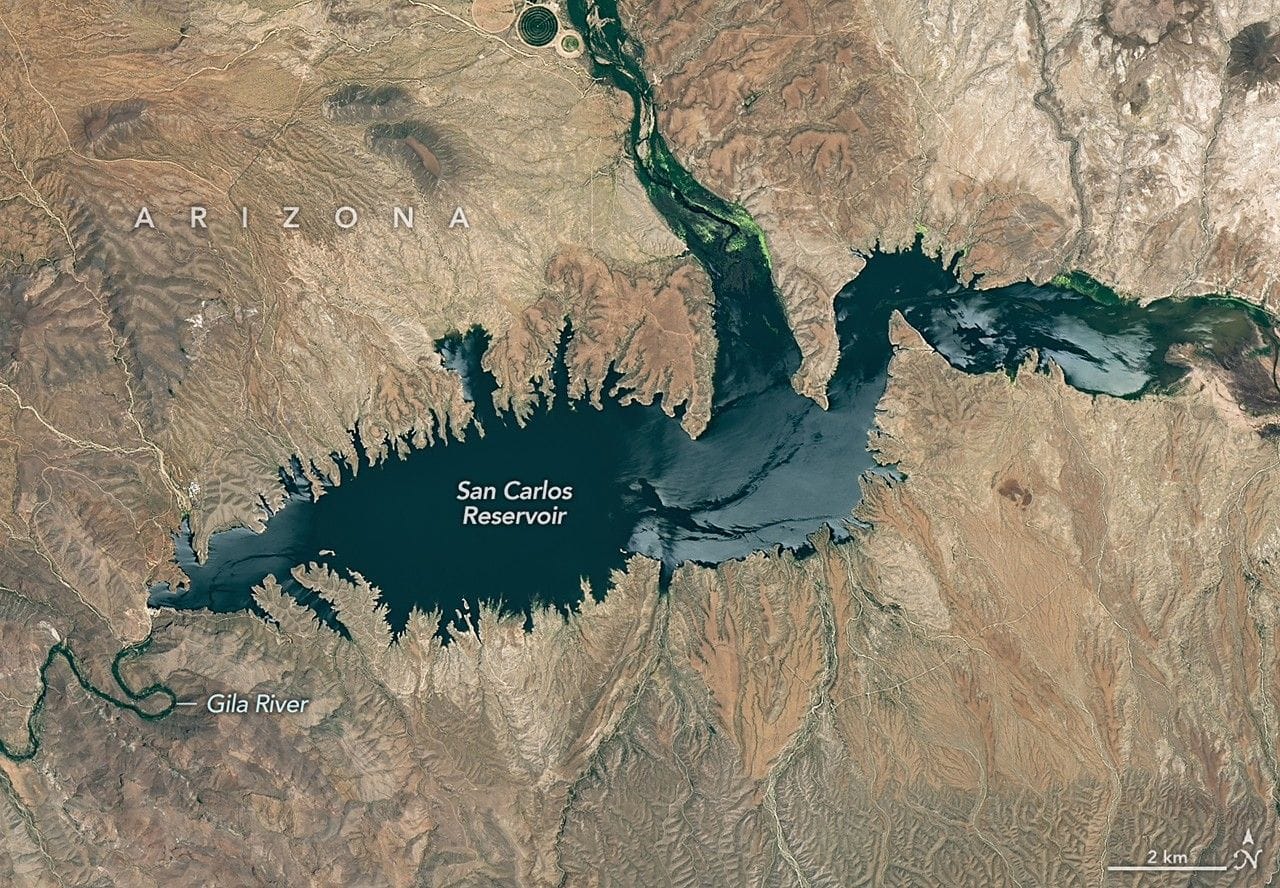
Seasonal snowfall in the Mogollon Mountains and Black Range was weak in 2026, leaving the Gila River watershed's March snowpack at 2 percent of the 1991-2020 median and April streamflow at 39 percent of normal. By June, mandatory water releases for downstream agriculture and the dry conditions had reduced San Carlos Reservoir to under 400 acre-feet; a Landsat image from May 22, 2026 showed it holding 389 acre-feet, less than 1 percent full, compared with about 60 percent full in June 2023.
Officials closed the reservoir indefinitely on June 5, 2026 after low oxygen levels—hypoxia—killed virtually all of its fish, including largemouth bass, black crappie, bluegill, channel catfish, flathead catfish, and stocked brown and rainbow trout. The San Carlos Recreation and Wildlife Department warned that decomposing fish may pose health risks to people attempting to boat or fish.
The reservoir has run dry at least 20 times since it was filled in 1930, and other years with major fish kills include 1976 and 2018.
san carlos, fish kill, hypoxia, gila river, snowpack, streamflow, drought, landsat, acre-feet, reservoir closure