Prescribed burns shift fire activity earlier in Australia’s Top End
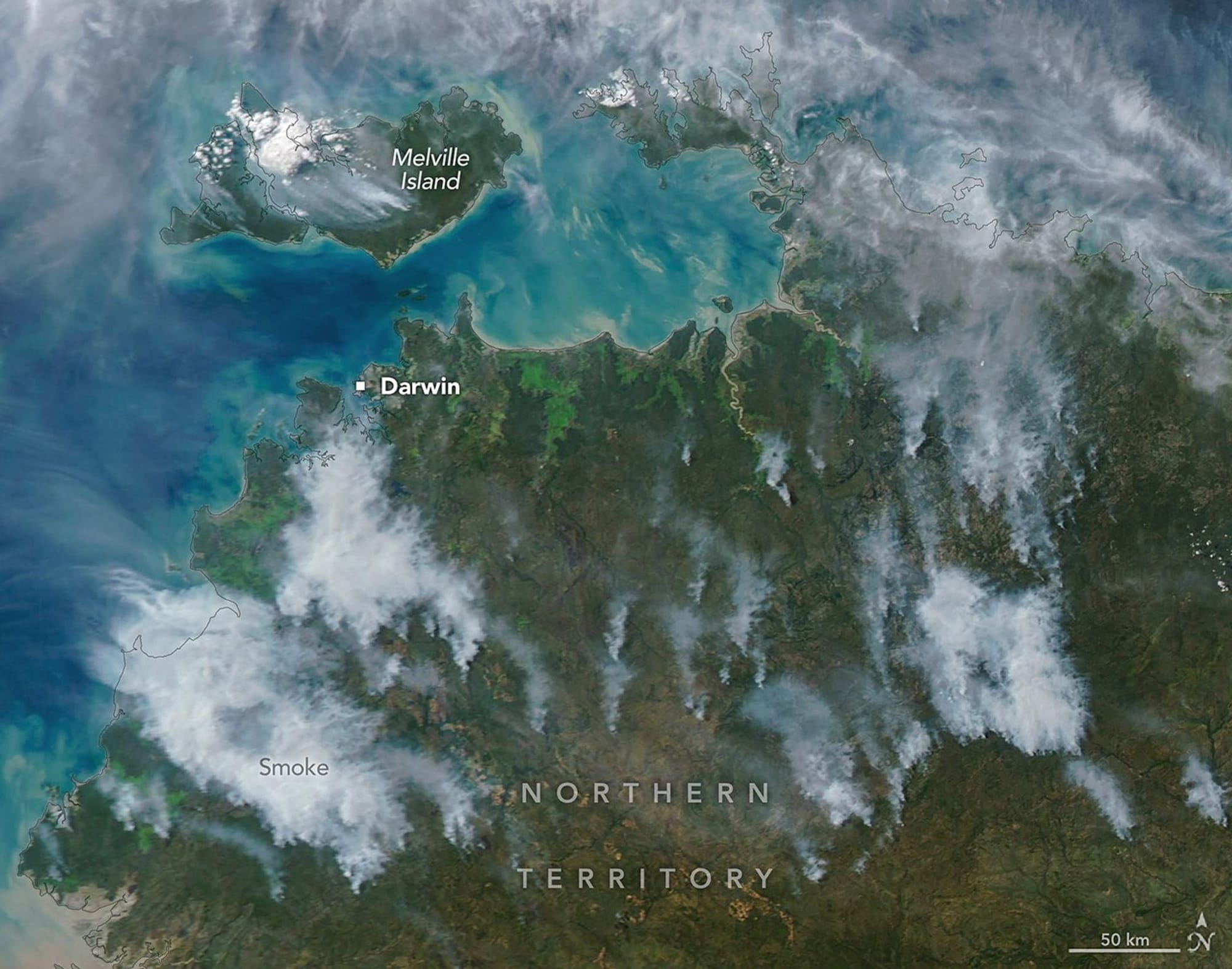
In Australia's Northern Territory, land managers use prescribed burns in fire-prone savannas to reduce the severity of later-season blazes. Satellites typically begin detecting large numbers of wildland fires across the Top End and Arnhem Land in May and June; an Aqua satellite captured widespread smoke and fires on the afternoon of May 28, 2026.
Many of the burns are lit in the morning, with little smoke visible in early satellite passes despite thermal anomalies that indicate fire activity. Smoke often builds through the day and, when updrafts and moderate winds are present, can form sizable plumes — as occurred on May 28 and again on June 2.
The fires typically sweep through fire-adapted grasses, underbrush, and scattered trees in the region’s tropical savanna. Over the past few decades, managers have combined Indigenous land management practices with modern technologies to run large-scale programs such as the West Arnhem Land Fire Abatement and Arnhem Land Fire Abatement projects.
Australia, Northern Territory
prescribed burns, top end, arnhem land, northern territory, aqua satellite, thermal anomalies, smoke plumes, tropical savanna, fire abatement, indigenous practices