Lucy Reveals Wobbling, Peanut-Shaped Asteroid
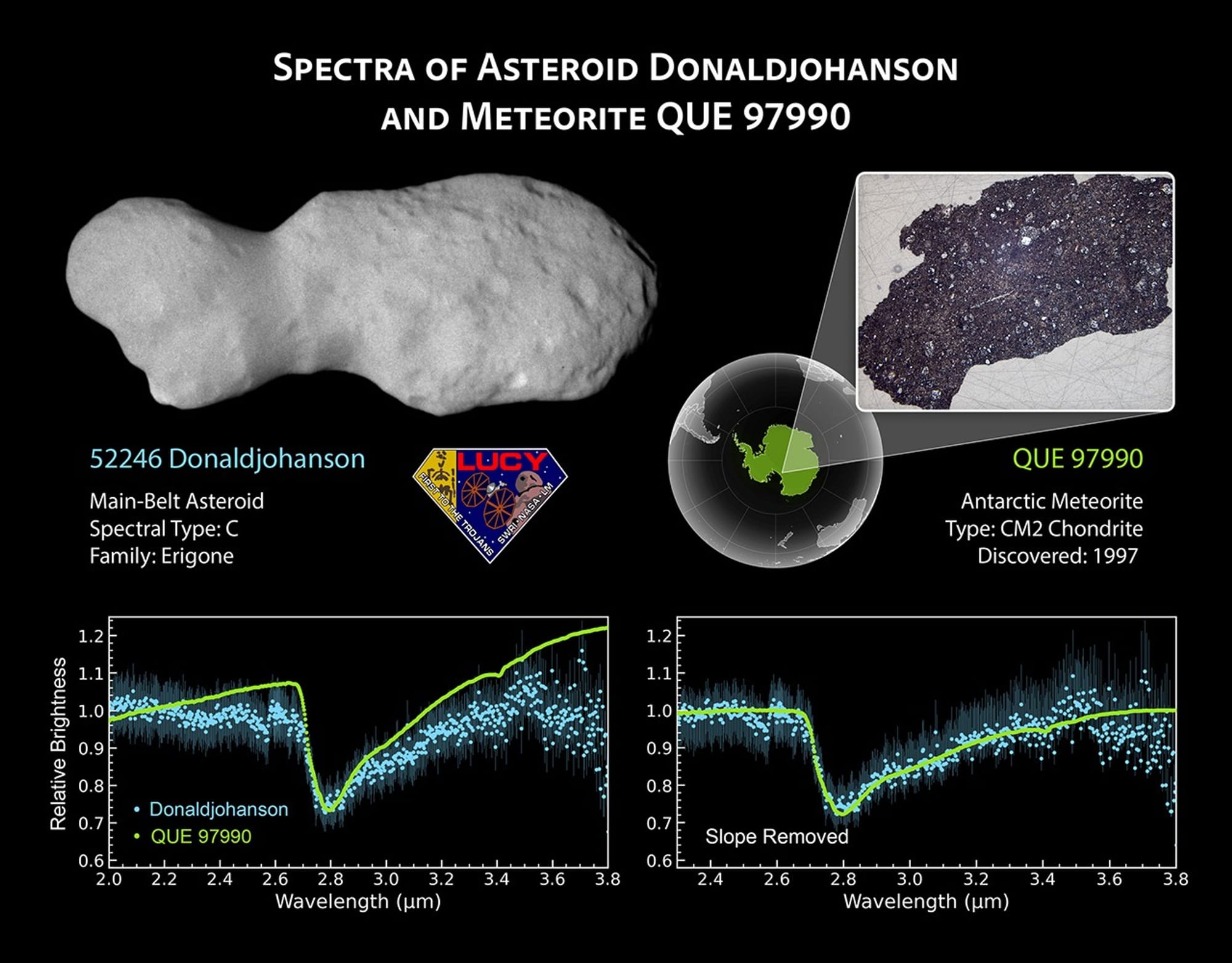
The Lucy spacecraft’s flyby of the asteroid Donaldjohanson on April 20, 2025, from about 650 miles away showed a wobbling, peanut-shaped body. Formed when fragments reassembled after a violent collision 155 million years ago, the asteroid still bears traces that suggest a brief presence of liquid water in its distant past.
Rather than spinning around a single axis, Donaldjohanson turns end-over-end once every 10.5 Earth days and wobbles back and forth around its long axis every 26.5 days. Earth-based observations had recorded light fluctuations pointing to a 10.5-day rotation, but the close encounter revealed the more complex two-axis motion.
The object’s bilobate shape likely reflects two fragments that gently came together. Scientists estimate it once rotated at least ten times faster and slowed to its present rate in the last 20 to 60 million years, probably under the subtle YORP effect, which altered the balance between centrifugal force and gravity and caused loose material to slide and soften many crater rims.
lucy spacecraft, donaldjohanson, asteroid flyby, peanut shaped, wobbling asteroid, bilobate shape, tumbling rotation, yorp effect, liquid water, violent collision