Juno Reveals New Insights into Cosmic Ray Origins
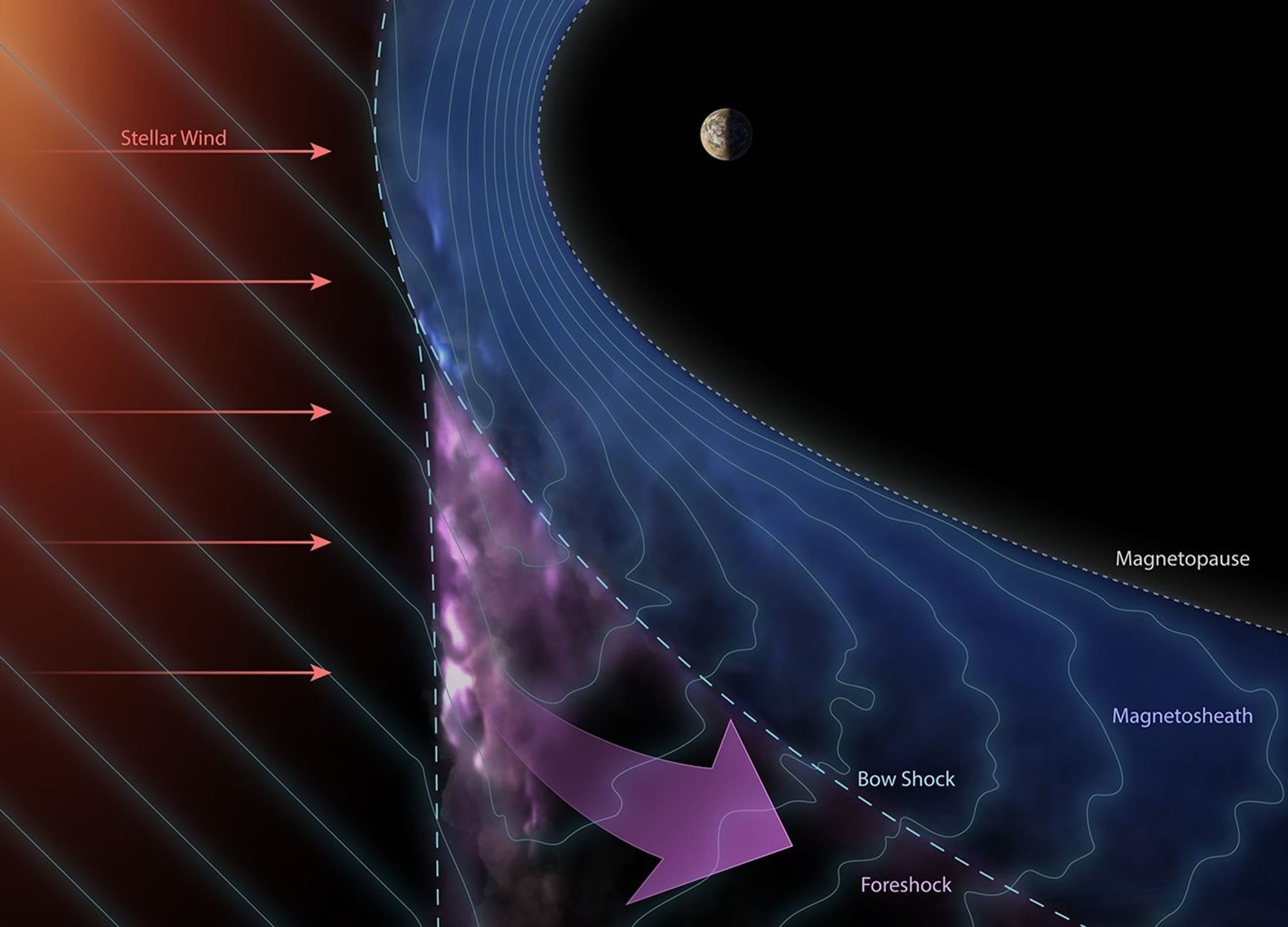
Particles traveling close to the speed of light near Jupiter were captured by the Juno mission, providing new evidence for how and where high-energy particles, including cosmic rays, form. Astronomers have sought the origins of cosmic rays for more than a century.
These energetic particles can come from many sources, including supernovas and eruptions from the Sun, and when solar cosmic rays reach Earth they can trigger space weather effects that disrupt satellites, communications, and power systems. Earlier NASA missions such as MMS and THEMIS showed how some electrons become highly energized in a region near Earth called the foreshock, where solar particles first encounter Earth’s magnetic field.
Scientists suspected the same acceleration process operated in foreshocks at other planets and astrophysical systems, but lacked direct confirmation. New observations around Jupiter provide that confirmation.
juno, jupiter, cosmic rays, foreshock, particle acceleration, solar eruptions, space weather, mms, themis, supernovas