Four days of extreme rain killed 7% of the world's rarest great apes
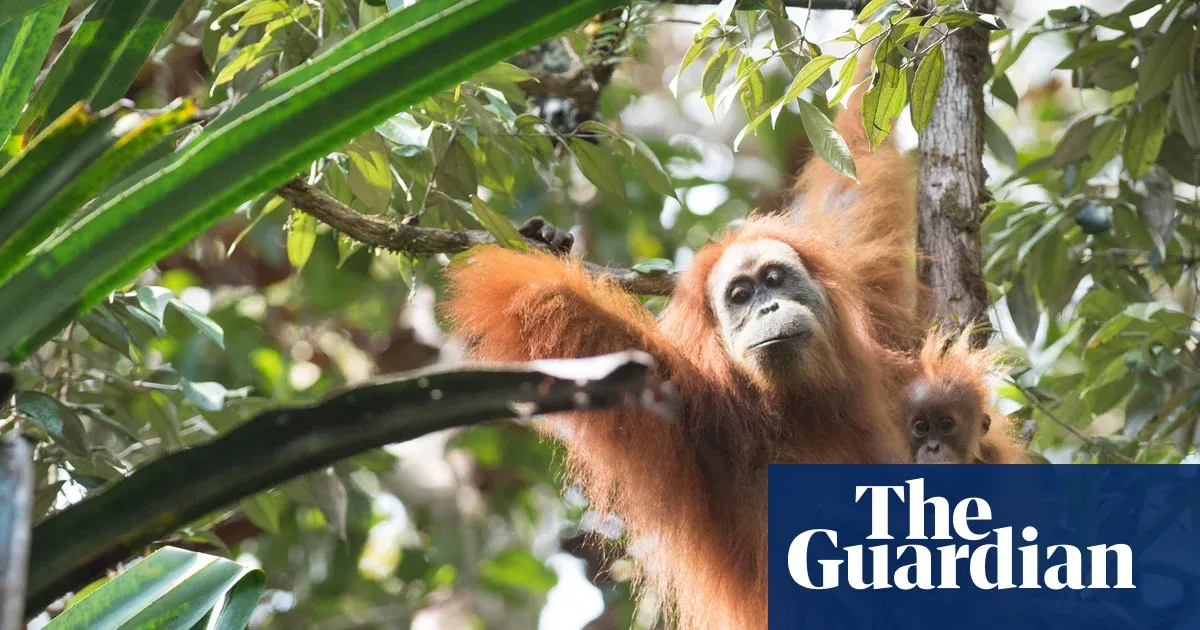
Extreme rainfall and landslides linked to the climate crisis killed 58 of the remaining 800 Tapanuli orangutans, the study finds — about 11% of the local population and 7% of the species. More than 1,000mm of rain fell over four days in North Sumatra in November 2025.
Scientists overlaid satellite imagery with ape-density estimates to assess the impact of Cyclone Senyar on the West Block of the Batang Toru ecosystem, already threatened by mining, palm oil plantations and a large hydropower project. The imagery showed roughly 8,300 hectares, or 11.7%, of this key forest habitat were wiped out by landslides, and the researchers said human-induced climate change increased rainfall intensity by up to 50%.
"It is tragic to lose so many apes in this way. In landscapes where populations are small and fragmented, this type of weather or climate event can have population-level consequences.
Indonesia, North Sumatra
tapanuli orangutan, north sumatra, cyclone senyar, batang toru, landslides, satellite imagery, hydropower project, palm oil, climate change, rainfall intensity