ChatGPT's memory upgrade helps recall — but can distort answers
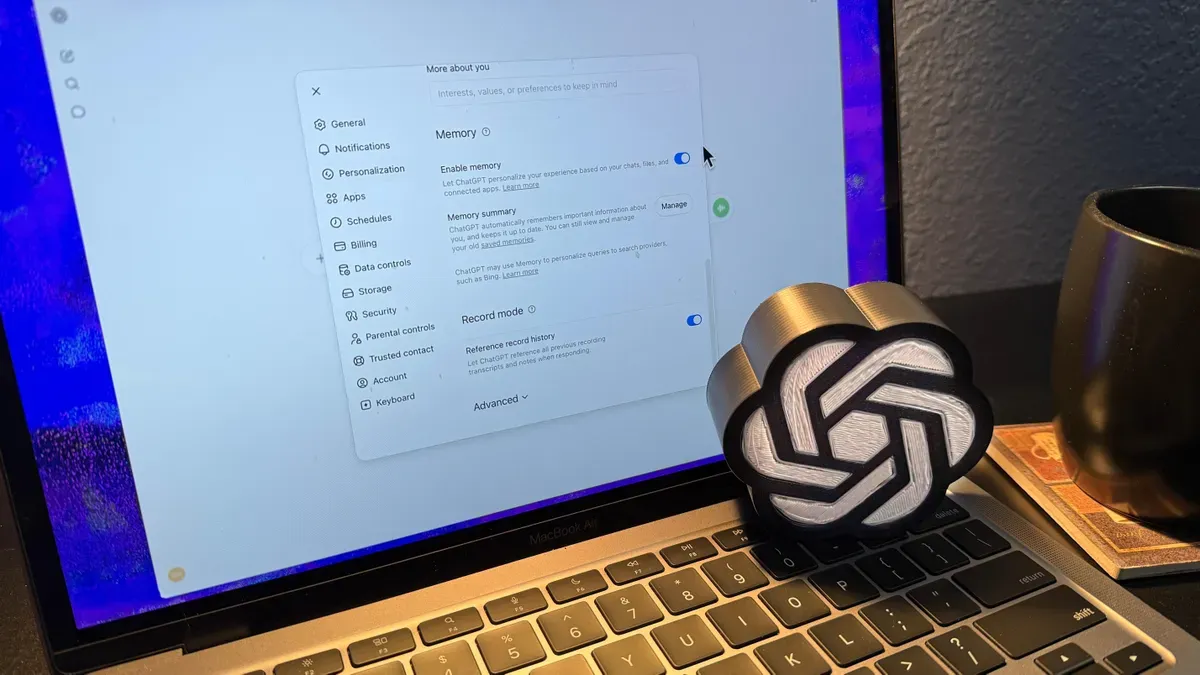
OpenAI's updated ChatGPT memory, now using "Dreaming" to synthesize a profile from past chats, can produce confident but incorrect summaries. The writer gives an example where ChatGPT claimed experience with a Kasa KP125M Matter plug and Home Assistant—details he says are wrong—showing how the system can compose a dossier that isn't accurate.
Memories began in 2024 as a saved list of facts tied to individual chats. In 2025 OpenAI added dreaming so the model could reference chat history in the background and curate memories automatically. Dreaming V3 in 2026 augments or replaces saved memories and, OpenAI's blog post says, raised factual task recall from 41% to 82%, time-correctness from 9% to 75%, and preference adherence from 31% to 71%.
The company also cut the compute cost for this ongoing analysis by 5X; Dream V3 is available now to Plus and Pro subscribers and will roll out to all users. Controls exist but are limited. Turning off memory stops dream-based consolidation but does not remove already-stored memories or chat history.
chatgpt, dreaming, dream v3, memories, hallucination, openai, chat history, chatgpt plus, compute cost, home assistant