
Bahram Beyzaie, Pioneer of Iran’s New Wave, Dies at 87
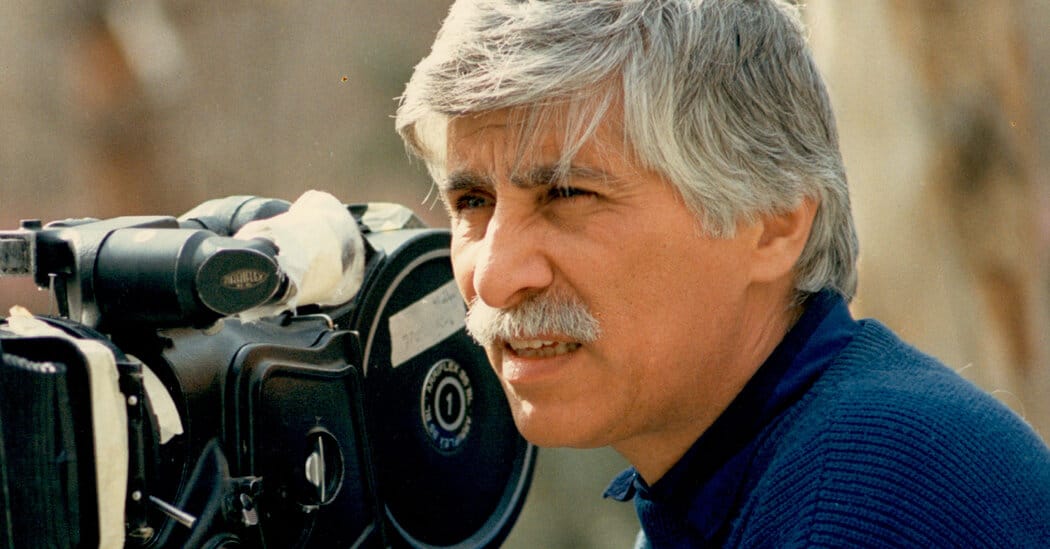
Bahram Beyzaie, a filmmaker, playwright and scholar who led Iran’s cinematic New Wave beginning in the late 1960s, died on Dec. 26 at his home in Palo Alto, Calif. He was 87. His death was caused by pancreatic cancer, which he had been battling for five years, his wife, the actress Mojdeh Shamsaie, said.
Mr. Beyzaie had been a lecturer in Iranian studies at Stanford University for 15 years. Celebrated as a giant of Iranian culture, Mr. Beyzaie wrote more than 70 books, plays and screenplays and directed 10 feature films, including Downpour (1972), Bashu, the Little Stranger (1989), Travellers (1992) and Killing Mad Dogs (2001).
Downpour was described in the Criterion Collection site as a cornerstone of the Iranian New Wave; Martin Scorsese, quoted on the Film Foundation website, said its tone recalled Italian neorealism and praised its story. His theatrical work included the two-part, roughly 10-hour Tarabnameh (2016).
Mr. Beyzaie repeatedly clashed with authorities. Many of his films and plays faced bans after the 1979 revolution, he was interrogated by officials, forbidden to stage plays for nearly two decades and ultimately lost his university post in Iran. He left Iran in 2010 to take his position at Stanford and continued to stage plays and run acting workshops.
Key Topics
Culture, Bahram Beyzaie, Iranian New Wave, Stanford University, Palo Alto, Downpour