Bacteria, cartilage and metal lead Tuesday research aboard station
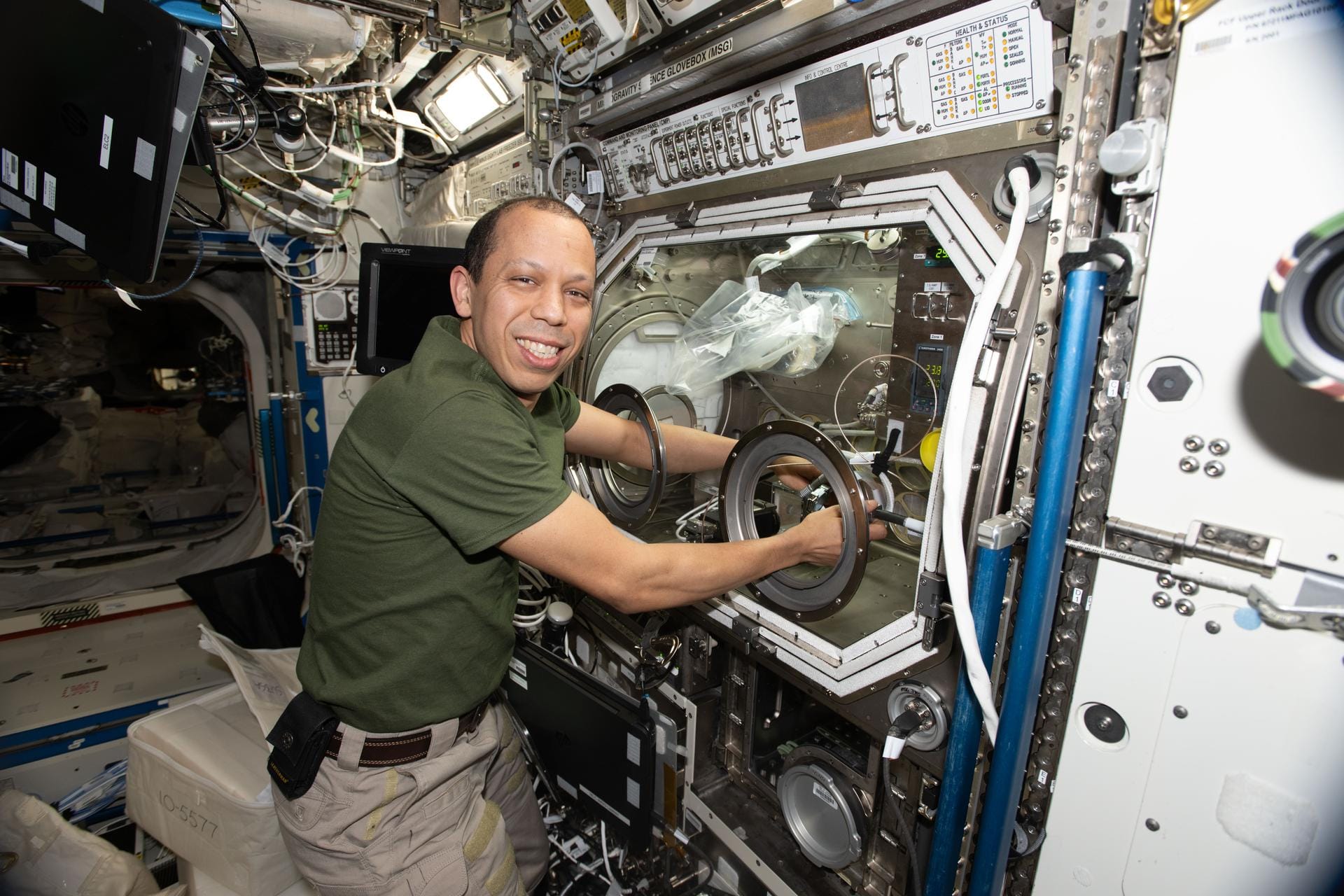
Microbiology, biotechnology and physics dominated research aboard the International Space Station on Tuesday as the Expedition 74 crew explored how microgravity affects bacteria, cartilage growth and metallic structure. Scientific hardware maintenance rounded out the schedule to ensure continuous experimental operations.
NASA flight engineer Jack Hathaway reviewed procedures ahead of an investigation to explore how bacteria adapt to the space environment. He familiarized himself with the tools and steps he will use to study two sets of bacterial samples in weightlessness—one treated with an antibiotic and the other left alone.
After five days of incubation their DNA will be sequenced to provide insight into microbial adaptation; results may lead to efforts to reduce infection risk and help protect an astronaut’s immune system during a spaceflight. NASA flight engineer Jessica Meir nourished cartilage tissue samples inside Kibo’s Life Science Glovebox as they grow to clarify cartilage cell and tissue function in microgravity.
United States
iss, microgravity, bacteria, antibiotic, dna sequencing, microbial adaptation, cartilage, kibo, glovebox, expedition 74